Interview
White Paper
The Future of Leadership Development: AI-Driven Manager Enablement

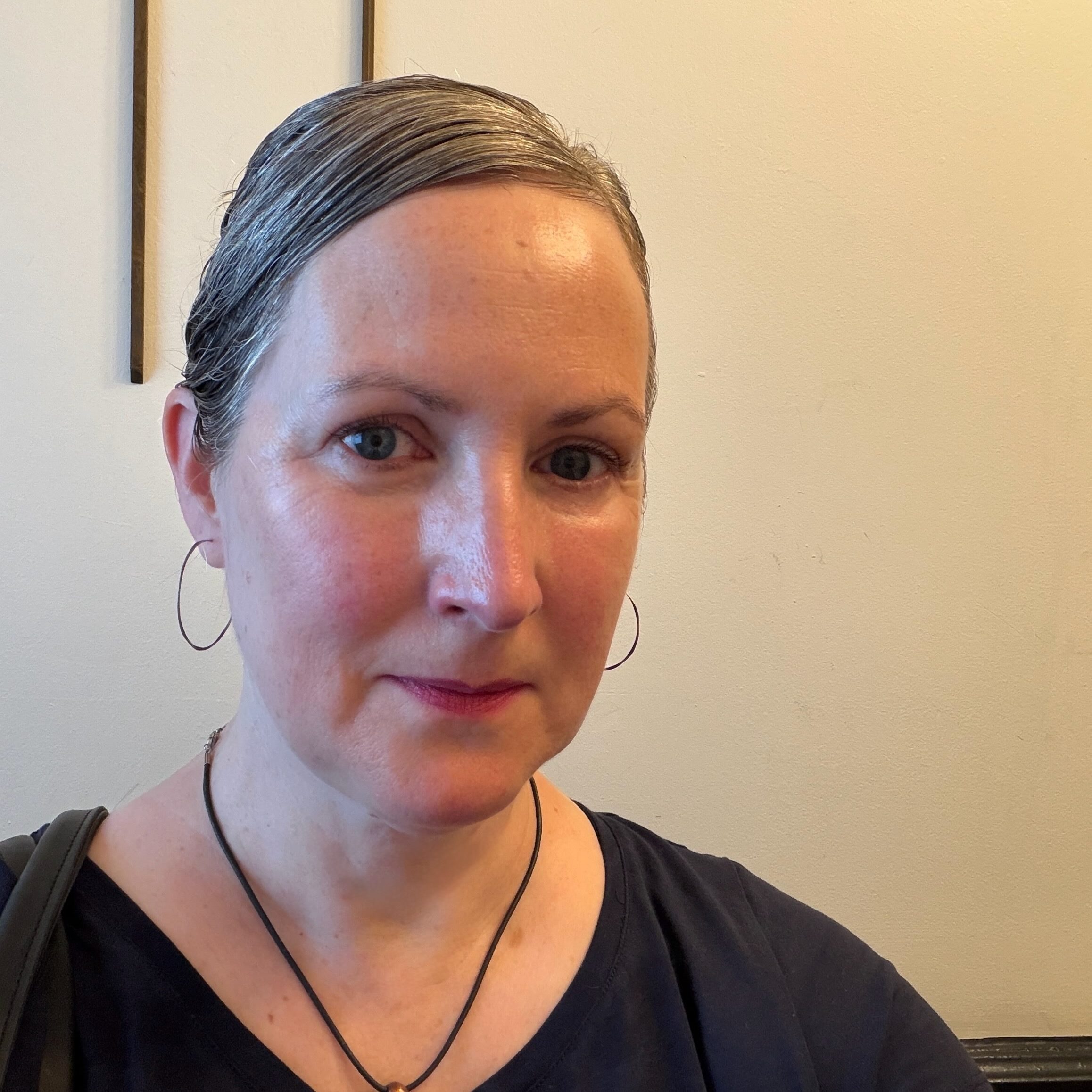
When we talk about the intersection of AI and professional development, the conversation easily drifts into abstract corporate metrics like efficiency and scale. But the real promise of tech-enhanced coaching is far more practical: its ability to deliver immediate, personalized support to people navigating the challenges of day-to-day work.
Dr. Anna Tavis, Chair and Clinical Professor of the Human Capital Management Department at NYU’s School of Professional Studies, has a front-row seat to this shift. As an educator and advisor, she is tracking how digital platforms are moving coaching out of corporate silos and embedding it directly into the daily workflows of everyday employees.
Following the 2026 NYU Coaching and Tech Summit, Dr. Tavis sat down to discuss the human impact of these new delivery models and shares her insights on what it looks like to bring meaningful, accessible development to the frontline.
Editor’s Note: The interview was edited for clarity and length.
Siobhan Fagan: One of the speakers at your recent NYU Coaching and Tech Summit said he believed we were on the precipice of coaching's golden age. What do you think the next steps are to make that vision come true?
Anna Tavis: Like everything else in AI, we’re figuring out the right combination of human and technology.
We see some companies saying never AI, it’s all going to stay human. In my view, they’re restricting the impact of what coaching could be. Other companies are saying AI coaching is the only coaching we’ll do. But the majority are ending up somewhere in the middle, and I think it will be up to each culture to decide what’s right for them. This is where leadership and understanding how these technologies and methods work will be very important.
I'm writing a chapter for a book on the future of executive coaching on how the market is changing and what the economics are for people getting jobs in coaching. What we've seen in the preliminary data from research I'm working on with Revelio Labs and its CEO Ben Zweig is that internal coaching coordinator and internal coaching jobs are actually shrinking. However, what's continuing to grow is the high-end executive-level coaching. That remains a very highly compensated, very prestigious, but very small market segment that will remain small.
The market didn't disappear, it just shifted to the platforms. There's a recruitment spurt on the platform side, in companies like BetterUp and EZRA and Valence [note: Tavis is an advisor for Valence], because that's how their tools are trained. These platforms are training a lot of humans on coaching skills, and those humans are embedding coaching directly in their everyday workflows.
That's where the market is going to continue to grow and the opportunity is going to emerge. I think the sky's the limit, because of the scaling effect and accessibility of this.
On day two [of the Coaching and Tech summit] we invited healthcare practitioners to speak to us about what they're doing with coaching. That's a huge market segment that was not really involved in coaching. I think we are going to see coaching being distributed across every industry.
Fagan: In 2024 I asked a number of people, including coaches, how far AI could go in terms of effectiveness of coaching. I was using the example of first-time middle managers making that transition from individual contributor to manager.
At the time, they were cautiously optimistic, but said at the end of the day AI cannot replicate the interaction with a human coach, it cannot represent the learned experience of seeing somebody performing behaviors.
Do you think the technology has moved past there? And are those setbacks besides the point if it gives people access to some kind of coaching that they never had before?
Tavis: The first thing I’d say is coaches are only one stakeholder group to ask, because if you ask the potential clients, their response would probably be it's better to get some support than none.
There’s a more fundamental issue with this logic, in that we always compare AI to the best available human. But we all know that not all coaches can get to that level of mastery. There are very, very few master coaches, and the disappointment of getting the wrong kind of coach is probably much greater than just saying, "Oh, this machine didn't work.”
The other thing is that we are now questioning what coaching is. The human to human and empathy piece is the top of the pyramid. However, the mission of coaching right now is not to continue to circle the top of the pyramid, but to expand the foundation.
And this is why I welcome the people coming in who are entrepreneurs. The majority of the founders of these coaching companies aren’t coaches, they're engineers. Engineers came out of big engineering companies with a certain skill set: they see the opportunity, they create a product and service and design the business around them. When they look at coaching, it’s not about them, it’s about delivering a service.
Fagan: During the summit, one case study focused on using coaching as the entry point for AI in a company. Do you think that is actually an effective approach, and why is coaching such a good way to introduce AI?
Tavis: Absolutely, it’s actually very, very effective. In fact, if you recall Christian Schmeichel from SAP, in his organization they decided to use coaching for technology transformation. Because of certain regulatory limitations in Europe, they actually scaled human coaching to promote AI acceleration. I know Christian was very constructive and positive about it, but European companies do feel a certain level of limitation because they can't use some of the automated tools that would allow them to do the same thing in a much more scalable and effective way.
But why is coaching such a great way to introduce AI? It’s because AI is a technology that is highly personalized — unlike any other technology that came before. As you and I know, and as every individual on this planet knows, a lot of change and learning happens at a deeply personal, individual level.
That is the basic disruption that is going to happen. AI transformation is not about rolling out some massive mainframe computer system or platform where everyone is forced to learn the exact same steps. It happens at a very personal level, and coaching is the most effective way to get everyone connected to that learning and actually enjoy it. That is a huge, positive departure from how we used to work.
Fagan: What guidance is the school providing your coaching students and HR students today who are getting ready to start a career in dramatically changing fields?
Tavis: This is why I'm undertaking the project to really understand what the market looks like, because I want to be very clear to them where the jobs are.
Successful coaching students who come out of that program usually join consulting firms or other firms that really need those coaching skills, but they’re also bringing expertise from somewhere else. One of our students is an attorney, so it's a combination of having a JD and the coaching — the consultancies look for that.
The other aspect of the program I want to emphasize is we're going to be doing a redesign of the program to include entrepreneurship. I really feel that most of our students are entrepreneurs.
I see entrepreneurship as a required skill set these days. A lot of the students coming out of our programs, the next step is to smaller, more dynamic, agile companies, where they have to have that entrepreneurial mindset. They also have to be more generalist than specialists, because smaller companies require them to do everything.
On the HR side too, they have to be entrepreneurially focused. On the very first week of school I take them to our center for entrepreneurship. Fortunately, at NYU we have a tremendous support system and expertise on how to do entrepreneurial work. We have venture funding, we have all sorts of systems here where they can start their businesses here, even joining other teams where they could be a team member learning the skills of what it takes to be an entrepreneur — that’s the future. It also develops their critical thinking, their creative thinking, exactly those skills that are not going to be outsourced to AI.
Fagan: When we look at your HR students who are aiming to be the next CHRO, how are you instilling the need to get more involved in the technology discussion and guide the direction AI is taking in their organizations? Not everyone is going to be Moderna’s CPO.
Tavis: That’s an absolute must. The right kind of CHROs are going to be running the IT departments. They’re not necessarily the engineers who are doing the work, but the whole aspect of the hybrid workforce [AI-human] needs to be resolved.
Fagan: You don’t see that working as a partnership?
Tavis: Totally. But the skill sets required are going to come from the human side rather than from the IT side. I studied how agile software development became a management trend, now agility is a non-negotiable in org design.
That kind of design skill set is going to be really critical for organizations, and it comes from understanding of both the human side and the technology side.
I am seeing all of these engineers getting into coaching, which is just as valid a trend, because the people in HR and to a certain extent engineers always thought of their respective domains as proprietary. Now we’re seeing blending — as I mentioned earlier with the former police officer, the lawyer, the attorney, people from financial planning entering coaching.
The professions or schools like ours are going to be training people to blend their subject matter expertise with the human skills.
Fagan: You're talking about people making transitions from careers that are quite successful, probably better paying, moving into coaching. On the one hand, that speaks to the altruistic appeal of coaching, but doesn’t it also point to a problem in the corporate world they’re leaving?
Tavis: Absolutely. People get so burnt out.
The woman who is going to be teaching our health and well-being certificate program is a Yale-educated MD emergency doctor. At some point she realized she was completely burnt out doing that type of work and switched to coaching. The people who have that experience of being in those markets and those professions are becoming really powerful coaches.
It’s why we don't admit students into the coaching program who have less than 10 years of experience.