Editorial
White Paper
The Future of Leadership Development: AI-Driven Manager Enablement

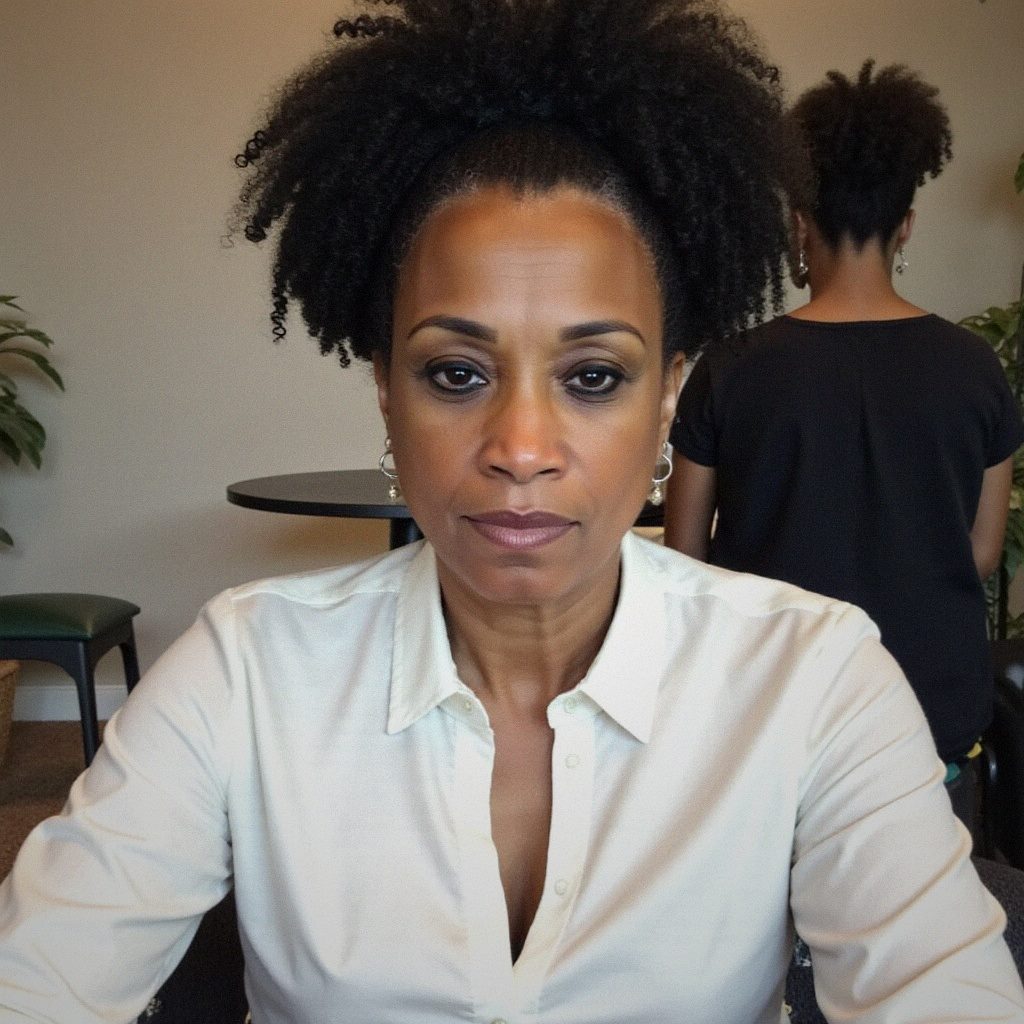
Systemic barriers have always existed in people-centric practices. Now AI is potentially intensifying existing barriers rather than eliminating them.
A favorite quote of a colleague, Jonah Ssenyange, aligns well here:
Audre Lorde once said: "There is no such thing as a single-issue struggle because we do not live single-issue lives."
That truth feels very relevant to Human Resources professionals right now.
Discrimination in the workplace is not a unique experience. It is a documented and measurable pattern that shows up at every stage of the employment journey, from the first interview and throughout the employee’s career pathway.
| 31% → 34% | Percentage share of Canadians reporting bias or discrimination when applying or interviewing for a job, rising to 34% once inside the workplace. (Pollara Strategic Insights, 2024) |
|---|---|
| 50% of employers | Identified unconscious bias specifically favoring candidates who share ethnic or other similarities with the hiring manager — as the top challenge in hiring decisions. (Canadian Human Rights Commission) |
| 55.6% of employers | Acknowledged that racialized employees do not have the same promotion opportunities as their peers. (CHRC) |
| 2 of 18 employers | Had an employment equity plan in place to boost racialized representation in management and executive roles, despite 44% citing workplace culture — including micro-aggressions, discrimination and harassment — as a barrier. (CHRC) |
Personally, I do not use the term “unconscious” bias anymore — it is bias plain and simple, and we all carry it. In fact, we all make assumptions that often lead to bias.
These are not isolated incidents. They are symptoms of systems that were never designed with all of us in mind.
The financial impact of systemic barriers is real and compounded for people who carry more than one racialized identity.
| 79¢ / 72¢ | What racialized men and racialized women, respectively, earn for every dollar a non-racialized man earns. The gap persists even between Black and white workers with the same education level. (BC Human Rights Commissioner, 2025) |
|---|---|
| 74.1¢ on the dollar | What racialized women earn compared to a white male worker — roughly a $10/hour difference. (Troy Media, 2025) |
| 13.1% → 15.2% | Growth in the share of racialized workers aged 25–54 in low-wage jobs (2022–2024), while the rate for white workers held steady at 7.3%. |
| $37.77/hr | Average hourly wage for non-Indigenous workers in 2024 — a benchmark that First Nations (off-reserve), Métis and Inuit workers all earned below. (Statistics Canada, 2025) |
The gender pay gap widens further for Black, Indigenous and other racialized women, and for women with disabilities. These inequities are not in isolated categories and are often compounded.
Canada's 2024 Employment Equity Act Annual Report acknowledges that while some progress has been made, gaps and barriers to full inclusion remain for women, Indigenous peoples, persons with disabilities, and members of racialized groups and communities.
| By the numbers | 20.9% of Canadian-born racialized people report discrimination as a barrier to gaining and keeping employment — 10.6 points higher than their non-racialized peers. |
|---|
This is the core of what HR professionals must confront: these are not individual failures. They are structural. They live inside the policies, programs and practices that govern how people are hired, onboarded, paid, promoted and supported throughout their careers. As HR professionals, it is time for us to address the systemic barriers still embedded in people programs, policies and practices that prevent some employees from access to equitable opportunities not just at the front door, but throughout the entire employment journey.
The impact of systemic barriers is even more profound for individuals facing multiple, compounding barriers and lack of equitable access and surrounding support. Understanding this intersectionality, the interconnectedness of these systems, is crucial.
Now layer AI on top of all of this.
AI is built on and engages in a workplace environment that has embedded systemic barriers — barriers already shaped by decades of biased decisions. When that history becomes training data and “experience,” AI does not correct the pattern. Instead it learns the patterns, scales the patterns and embeds the patterns in AI-based processes faster than any single hiring manager or Human Resources team member ever could.
| 57% vs. 43% | Share of women, vs. men, more likely to be in roles disrupted by AI. Fewer women than men will see their work augmented by generative AI (46% vs. 54%). (World Economic Forum) |
|---|---|
| 40% of applications | Now filtered by AI before a human ever reviews them. |
| 68% of recruiters | Believe AI removes bias from hiring, however there is not yet full confidence of this and it is not matched by the evidence. |
The WEF report states: advancing AI with limited talent diversity risks “economic drag and AI-driven inequality.” Algorithms learn from historical data, and that data carries the weight of decades of discriminatory hiring practices. Left unchecked, AI does not remove bias from the system — it launders it, and makes decades-old systemic patterns look like objective, data-driven outcomes.
Across all levels and functions, HR professionals and people leaders need to understand that the emerging future of work and AI requires expanding existing skills and competencies. The tools may be new. The accountability is not.
The evolution of systemic HR practices is inevitable given the changing labor markets and demographics, increased reliance on AI, and the ongoing redesign of work itself. But this evolution faces significant challenges in HR skill sets, organizational people strategy and resource allocation. HR professionals must transition from specialized roles to cross-disciplinary expertise moving from the status quo to action.
That means going beyond awareness. It means building capacity to:
The work ahead spans the full employment lifecycle: from how we source and recruit talent, to how we welcome people through onboarding, how we assess and compensate them, how we develop their careers, and ultimately how we support their departure with the same dignity we intended at hire.
Let’s be realistic here: HR is already using AI, whether through resume screening, interview scoring or performance analytics. The question is not whether to engage with these tools, it is whether HR is prepared to govern them with the same rigor applied to any other people-centric decision.
Safeguarding today's AI tools is necessary but not enough. HR is also one of the few functions positioned to shape what these systems become and HR needs to understand how important this is.
None of this requires HR to become a technical function. It requires HR to understand the accountability that should be embedded in HR and the importance of asking who gets left out, and the importance of bringing that question into every room where these tools are designed, purchased and deployed.
Bias did not go away. In many cases, we automated it. The question now is whether HR professionals and people leaders are ready to do the harder, more human work of dismantling it, intentionally, structurally and at every stage of the employment journey.
For more on this theme, see my previous article — What People-Centric Leadership Looks Like When AI Is Involved.
 Learn how you can join our contributor community.