Editorial
White Paper
The Future of Leadership Development: AI-Driven Manager Enablement

Everyone is tired. Leaders and teams feel depleted. And it hits differently this time. During the pandemic, burnout was visible and openly discussed. Today, it’s a deeper kind of tired we’re not talking about. The pace keeps accelerating while the volume of work and expectations are constantly rising. Even tools that were supposed to make work easier are now creating new forms of human strain. Our ability to keep up is being challenged every day.
Meanwhile, companies continue to push for efficiency and speed, celebrating productivity gains. In many AI-enabled environments, the pressure is even greater as businesses continue to reduce headcount and expect employees to take on the extra work.
It’s a strange and complicated moment. The work never feels done.
Even if productivity is a main focus, the goal shouldn’t be pushing employees to their breaking point. The focus should be creating the conditions for employees to deliver strong business results without burning them out.
But how can companies recognize the human cost of continuously expanding work before performance breaks?
Deloitte introduced the idea of “human sustainability” in 2024 to broaden how workplaces think about long-term performance: “the degree to which the organization creates value for people as human beings, leaving them with greater health and well-being, stronger skills and greater employability …” among other positive outcomes.
It’s a useful starting point. However, today’s reality requires taking it a step further with a metric grounded in the everyday moments that shape how work is really happening: where workflows break down and systems create friction. EX impact now sits mainly at the team level. While it isn’t the original source of the pressure, it is where organizational demands are translated into lived experience. Which means it’s also the greatest opportunity for leaders to make work more humanly sustainable.
The challenge is that organizations don’t measure sustainable work with the same seriousness they apply to other business metrics. Revenue growth and operational efficiencies are closely monitored for company success. Physical assets are carefully maintained to avoid operational disruptions. Yet very few companies actually measure the human capacity needed to successfully sustain business results.
No organization would intentionally run critical assets to the point of depletion while expecting positive long-term business results. Human capacity works the same way. Under constant pressure, execution quality declines, innovation slows down and business outcomes eventually suffer.
Gallup estimates that employee burnout costs the global economy $322 billion each year in turnover and lost productivity. Burnout as a result of unsustainable work is increasingly a business issue, whether companies formally measure it or not.
The good news is that most organizations already have these signals available to measure unsustainable work. They just need to formally connect them:
Without paying attention to these signals, productivity eventually slows down as teams become too overloaded to adapt effectively to change. For many companies, that moment is already here.
Workplaces are at a crossroads.
They can continue demanding productivity and efficiency as if human energy and capacity are endless resources.
Or they can intentionally redesign work in ways that allow people to sustain both performance and well-being over time. Even when the work itself doesn’t go away and additional headcount is limited, leaders still have choices: ruthlessly prioritizing what matters most, reducing unnecessary work and helping their teams create clearer boundaries on how to spend their time and energy.
There’s a strong business case for creating the conditions that lead to sustainable work. McKinsey’s Organizational Health Index found that companies with strong organizational health deliver three times higher shareholder returns.
Sustainable human performance is becoming critical to an organization’s ability to adapt and deliver long-term results.
This requires companies to start paying closer attention to the balance between human capacity and sustainable work at the team level, where the work is actually happening and where pressure tends to show up first.
At some point, every company runs into the reality that people can and will be depleted.
Editor's Note: What else can leaders do to help workers do their best work?
 Learn how you can join our contributor community.

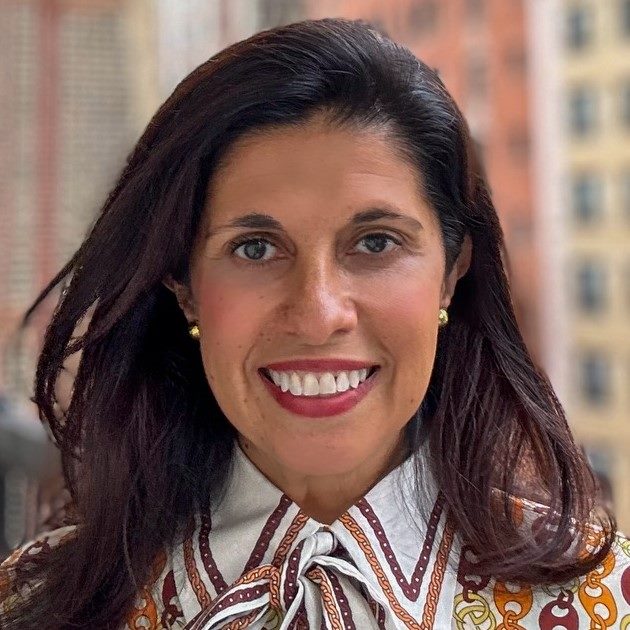
Lourdes Gonzalez is an organizational effectiveness advisor and founder of Better Work, where she helps organizations redesign how they operate in the AI era.
She writes about leadership, technology, AI, and the systems that shape how organizations make decisions, enable performance, and adapt to change, translating emerging workplace trends into practical insights leaders can apply.